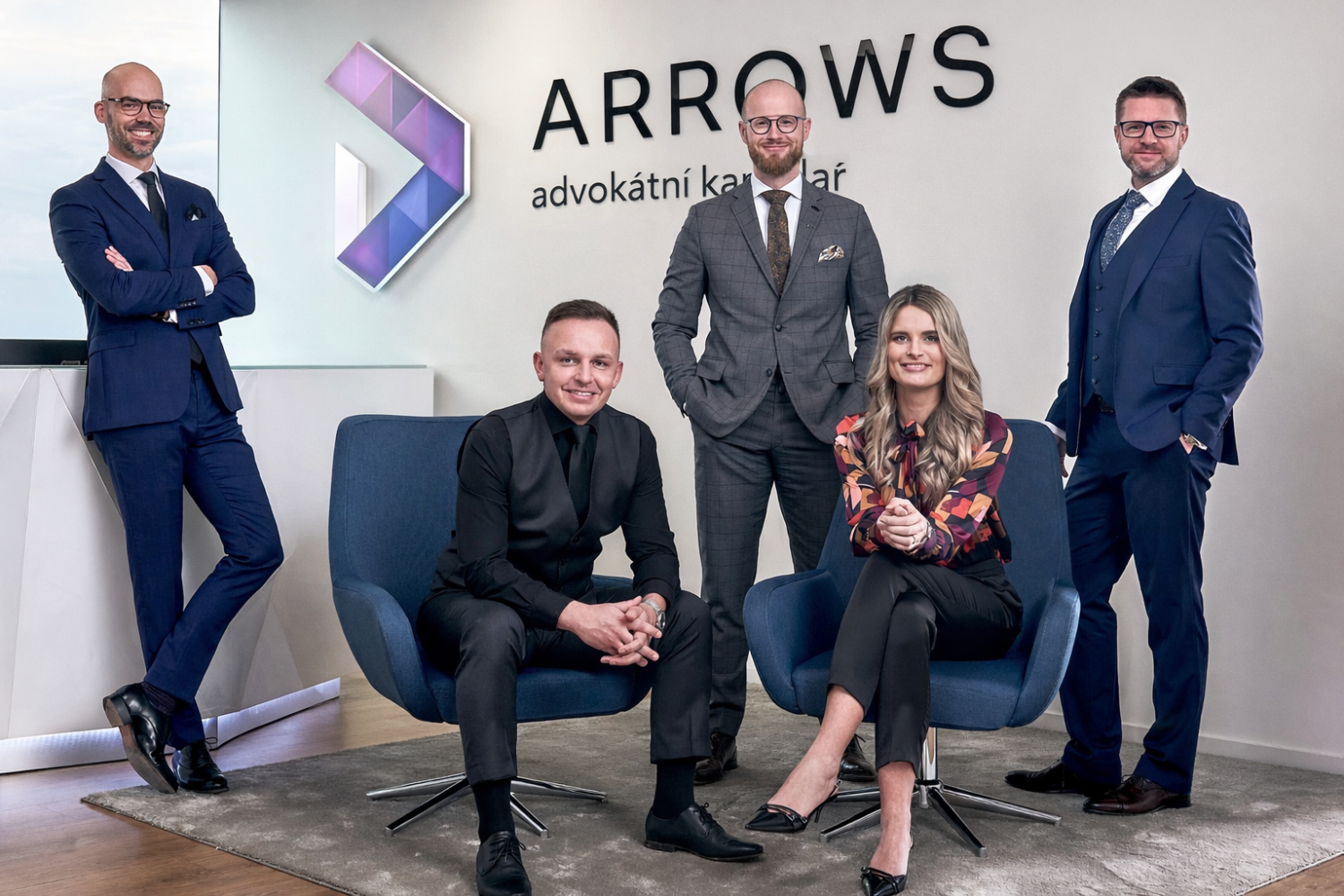
How to pass on a business to your son or daughter: Advice from specialists in this field – lawyers from ARROWS.
start_thought
Are you considering how to ensure that your life's work survives long after you are gone, while maintaining family harmony and prosperity? In this comprehensive guide, you will learn how to strategically manage intergenerational succession using holding structures, family constitutions, and trust funds under Czech law. Do not lose control over your legacy; discover from our attorneys in Prague at ARROWS how to transform a personal vision into an institution that protects your assets in the Czech Republic and abroad.
Article Content
- Strategic preparation and the succession timeline
- Holding structures: Institutionalization and asset protection
- Donation of shares during one's lifetime
- Sale of shares to a successor
- Inheritance law and protection of forced heirs under Czech law
- Trusts and foundations: Autonomous management of family wealth
- International reach and cross-border estate solutions
- Settlement between siblings and protecting business continuity
Family business in the Czech Republic represents a specific economic and legal phenomenon, currently defined by the historic milestone of the first major wave of intergenerational transition. Unlike Western jurisdictions, where the continuity of family firms remained uninterrupted in modern history, the Czech environment bears the marks of a forty-year absence of private ownership and entrepreneurship.
Company founders who built their businesses in the post-revolutionary euphoria of the 1990s are now at a life stage where it is essential to transform their personal vision into a robust institutional structure that ensures the survival of the enterprise even after their departure from active management.
This process, professionally referred to as intergenerational transition (MGO), is not merely a simple transfer of a business share, but a complex restructuring involving corporate, inheritance, tax, and psychological aspects. Neglecting these can lead to fatal consequences for both company stability and family relationships. In this area, ARROWS provides comprehensive services in corporate law, holdings, and structures in the Czech Republic.
Strategic preparation and the succession timeline
A key success factor in handing over a company is the timely commencement of the process, which should not be viewed as a one-off transaction but as a long-term project with clearly defined milestones. Professional consensus suggests that the ideal age to begin active succession planning is around the founder's fiftieth year. During this period, the owner possesses sufficient energy for mentoring and knowledge transfer, while the generation of potential successors has usually reached professional maturity, allowing for their gradual involvement in decision-making processes.
Handing over a firm requires a deeper strategy that begins with the founder's "mental preparation." It is essential to identify motivations for change, clarify the target state, and analyze the abilities and interests of the descendants. In situations where multiple children express interest in leadership, roles must be discussed; conversely, if a descendant is not interested in the business, financial settlement paths must be sought early to prevent future inheritance disputes. Learn more about expert perspectives on this topic in the article Practical duties of managing directors: Insights from our Czech corporate lawyers.
| Transition Phase | Key Activities and Milestones | Role of the Professional Advisor |
| Initiation Phase (5–10 years before exit) |
Identification of successors, defining family vision, initiating open communication. |
Facilitation of family discussions, analysis of existing structure. |
| Preparation Phase (3–5 years before exit) |
Education of successors, delegation of projects, creation of a family constitution. |
Legal design of structures (holdings, funds), tax optimization. Details on future changes in asset reporting can be found in the text Mandatory asset reporting in 2026: Which exempt incomes will the Czech tax authority target? |
| Implementation Phase (1–2 years before exit) |
Signing of contracts, transfer of shares, registry entries, notification of partners. |
Legal transaction services, notary deeds, communication with Czech authorities. |
| Post-transaction Phase (Follow-up) |
Mentoring, supervisory board roles, monitoring compliance with the family constitution. |
Review of structures, updating documentation according to Czech legislative changes. |
The risks associated with failing to address succession are significant and include the breakdown of family cohesion, the departure of key managers due to uncertainty, and in extreme cases, the paralysis of the firm upon the sudden death of the founder, when assets fall into complicated and lengthy probate proceedings in Czech courts. Similar issues are addressed in the article Slovak citizen establishing a Czech trust: Insights from our attorneys, which describes the specifics of asset management.
Family Constitution as the foundation of the ethical and operational framework
The Family Constitution is becoming an increasingly popular tool in the Czech Republic, serving as the "written glue" for family businesses. It is a set of principles and procedures that govern the relationship between the family and the business. Although this document is generally not legally enforceable in Czech courts, its moral force and influence on conflict prevention are fundamental.
The main benefit of the constitution is the prevention of disputes arising from the differing expectations of family members. For example, in a situation where one sibling actively works in the company and the other pursues a different field, the constitution clearly defines who has the right to management and how dividends will be distributed. The constitution can set specific requirements for the next generation, such as the obligation to obtain a university degree or complete at least three years of experience in a company other than the family firm.
An important part of the constitution is the protection of assets from external influences, such as the divorce of family members. The constitution may include a commitment that every family member entering the ownership structure of the company must enter into a prenuptial agreement, ensuring that shares in the business remain within the family line even in the event of a marriage breakdown. The process of creating the constitution should be inclusive and involve younger family members so that the document reflects not only traditions but also the modern approaches and visions of the rising generation.
Holding Structures: Institutionalization and Asset Protection
At a certain size and complexity of business, a holding structure becomes a strategic necessity. A holding company allows for the separation of valuable assets (e.g., real estate, intellectual property, financial reserves) from risky operational activities. This separation creates a safety shield that protects family wealth from creditors, insolvency, or litigation in Czech courts arising from the day-to-day business of subsidiaries.
For the purposes of intergenerational transfer, a holding structure offers several advantages:
-
Simplified Administration: Instead of transferring shares in several subsidiaries, only the share in the parent company is transferred, reducing administrative and legal costs.
-
Targeted Entry of Successors: A holding company allows children to be involved in specific business segments through subsidiaries without disrupting control over the entire group.
-
Financial Synergies: Centralization of cash flow and the possibility of intra-group financing (cash-pooling) increases liquidity and reduces dependence on external loans.
-
Tax Efficiency: Dividend flows and profits from the sale of subsidiaries are exempt from corporate income tax within the holding structure if legal conditions are met (notably holding a $10\%$ stake for $12$ months).
When establishing a holding company, it is essential to conduct a thorough review of existing liabilities and "cleanse" the companies entering the structure so that old risks do not jeopardize newly invested assets. Czech tax authorities also examine the economic justification for the holding's existence; therefore, owners should maintain a "defense file" proving that the structure was not created solely for tax optimization purposes.
Legal Regimes for Asset Transfer: Donation vs. Sale
The choice between donating or selling a business share depends on the founder's financial needs and the successor's ability to finance the transaction.
Donation of Shares During Lifetime
Donation is the most common method of intergenerational transfer in the Czech Republic, primarily due to the broad income tax exemption for direct-line relatives (father/mother – son/daughter). The exemption also applies to siblings, spouses of children (sons-in-law and daughters-in-law), and persons living in a common household with the donor for at least one year. Although the donation is free of charge, the recipient must report the acquisition of assets exceeding a value of $5$ million CZK to the tax office; penalties for non-compliance can reach up to $15\%$ of the gift's value.
The donor's legal certainty can be strengthened by establishing an easement (e.g., in the case of real estate owned by the company) or by a provision in the donation agreement restricting the recipient's ability to resell the share without the donor's consent.
Sale of Shares to a Successor
A sale is the preferred choice in situations where the founder needs funds to secure their retirement or to pay out other descendants who are not continuing in the business. A common model is a management buy-out (MBO), where the successor finances the purchase of the share from future company dividends or through a bank loan secured by the share. The sale of a share is subject to taxation unless a "time test" is met. For individuals, the sale of a share in a Czech s.r.o. (limited liability company) is exempt after 5 years from its acquisition.
Inheritance Law and Protection of Forced Heirs
If a business owner does not transfer assets during their lifetime, the assets pass to heirs within probate proceedings. The Czech Civil Code allows the testator to draw up a will, an inheritance contract, or a legacy.
| Inheritance Instrument | Binding Nature and Form | Specifics for Family Businesses |
| Inheritance Contract |
Strongest legal title; requires the form of a notarial deed. |
The founder and successor contractually agree on future inheritance; this cannot be unilaterally revoked under Czech law. |
| Will |
A unilateral revocable document; a notarial deed is recommended for registration in the Czech Register of Wills. |
Allows for the setting of conditions (e.g., completion of studies) or instructions for future company management. |
| Legacy (Vindication) |
The testator bequeaths a specific item without it being counted towards debts. |
Suitable for separating movable assets or art collections from the main share in the company. |
A key limitation of the testator's will under the Czech legal system is the institute of the forced heir. Forced heirs are exclusively the descendants of the testator (children, grandchildren). If they are omitted from the will, they have a right to a so-called mandatory share of the estate. A minor heir must receive at least three-quarters of their legal share, while an adult heir must receive one-quarter.
An important aspect for company stability in the Czech Republic is that the right to a mandatory share is primarily a monetary claim, not a claim to physical assets. The omitted descendant does not automatically become a partner in the company, but rather a creditor of the heirs who acquired the business. However, this obligation to pay out the mandatory share in cash can represent a fatal liquidity shock for the firm. To mitigate this impact, the institute of collation (offsetting) can be used, where gifts received by the heir from the testator during their lifetime (e.g., real estate, previous shares in other companies) are counted towards the mandatory share.
Trusts and Foundation Funds: Autonomous Management of Family Wealth
For families seeking to preserve asset integrity across multiple generations, Czech trust funds (SF) and family foundation funds (NF) are ideal tools. Both instruments allow for the separation of assets from personal ownership into an independent structure managed for the benefit of the family.
Trust Fund (Svěřenský fond)
A trust fund under Czech legislation is not a legal entity, but assets without an owner (an "asset cloud") managed by a trustee. Its main advantages include:
- Anonymity: The names of founders and beneficiaries are hidden in the public section of the Czech Register of Trust Funds.
- Geographical Mobility: The fund can be moved to another jurisdiction if necessary (e.g., due to geopolitical instability).
- Asset Protection: Assets in the fund are separated from the personal wealth of family members, protecting them from claims during divorces or personal insolvencies.
Foundation Fund (Private Foundation)
A foundation fund is a legal entity with its own legal personality, which gives it the advantage of clarity in international relations and when dealing with banks.
| Comparison Parameter | Trust Fund (SF) | Foundation Fund (NF) |
| Legal Personality |
No (sui generis institute) |
Yes (legal entity) |
| Method of Formation |
Registration in the Register of Trust Funds |
Registration in the Foundation Register |
| Internal Bodies |
Trustee (or Board of Trustees) |
Board of Directors, Supervisory Board/Auditor |
| Statute Flexibility |
Changes to statutes often only via Czech courts |
Higher flexibility if reserved by the founder |
| Duration |
Limited to $100$ years for private purposes |
Unlimited in time |
From a tax perspective, these funds are considered legal entities with a corporate income tax rate of 21% in the Czech Republic. Profit distributions to beneficiaries are subject to a 15% withholding tax, similar to dividends in commercial corporations. However, if the fund pays out assets that were previously invested (return of principal), this payout is tax-exempt if the statutes are correctly configured.
International Scope and Cross-Border Estate Solutions
With the increasing volume of foreign assets held by Czech entrepreneurs, the issue of private international law is becoming more significant. A key regulation is EU Regulation No. 650/2012 (Brussels IV), which harmonizes inheritance rules within the EU.
The primary criterion for determining the applicable law is the "habitual residence" of the deceased at the time of death. If an entrepreneur spends most of the year at their residence in Spain, there is a risk that Spanish succession law—which is very restrictive regarding forced heirship shares—will apply to their company in the Czech Republic. To avoid this uncertainty, the EU Succession Regulation allows for an express choice of law in a will, selecting the law of the state of which the deceased is a citizen (typically Czech law).
Succession systems in neighboring countries exhibit significant differences:
- Germany and Austria: The forced share is always only a monetary claim against the heirs. In Germany, parents are also entitled to a forced share if the deceased had no descendants.
- Poland: The system is similar to the German one; the claim to the "zachowek" amounts to half of the statutory share (two-thirds for minors).
- Spain: Extremely strong protection for descendants, where two-thirds of the estate must be distributed among children, with only one-third being fully at the disposal of the deceased.
For managing assets abroad, it is recommended to obtain a European Certificate of Succession (ECS), which serves as a uniform proof of heirship recognized by all Member States (except Denmark and Ireland) and facilitates communication with foreign banks and land registries.
Settlement between siblings and protecting company operational capacity
The most common source of conflict is when a company is inherited by multiple siblings with completely different visions for its future direction. If no agreement is reached, the siblings become co-owners of the business share, which in practice often leads to decision-making paralysis (a so-called deadlock).
Legal solutions for these situations under Czech law include:
- Demerger of the company: If operationally feasible, the company can be split into independent divisions managed by the siblings separately.
- Financial settlement: One sibling retains the company and buys out the other. For these purposes, determining the market value of the share by an impartial expert is crucial.
- Shareholders' Agreement (SHA): A document governing voting rights, pre-emptive rights, and dispute resolution mechanisms (e.g., "Russian Roulette" or "Texas Shootout" for forced share buyouts).
- Disinheritance: An extreme tool permissible only for reasons specified by Czech legislation (e.g., failure to provide aid in need, leading a permanently dissolute life, conviction for a perverse criminal offense). Invalid or insufficiently justified disinheritance is a frequent subject of lengthy litigation in Czech courts.
Final recommendations for effective transformation
The process of intergenerational transfer of a family business is a discipline that does not tolerate improvisation. It requires the cooperation of the founder, the family, and a team of professional advisors – our attorneys in Prague, tax experts, and financial strategists.
The foundation for success is:
- Start the discussion early: Identify the ambitions of successors and the limits of the founder at least $5$ years before the planned departure.
- Institutionalize governance: Utilize holding structures for asset protection and trust funds or foundations to ensure long-term continuity under Czech commercial law.
- Formalize values: Draft a family constitution that defines the "rules of the game" for current and future generations.
- Do not underestimate taxes: Take advantage of existing exemptions and react promptly to legislative changes planned for 2025 in the Czech Republic.
The intergenerational transfer of a company is not the end of a business story, but its transformation into a lasting family legacy. The legal tools described in this analysis provide the necessary framework to ensure this transition occurs with dignity, security, and in accordance with the founder's vision.
Disclaimer: The information contained in this article is for general informative purposes only and serves as a basic orientation on the subject. Although we ensure maximum accuracy of the content, legal regulations and their interpretation evolve over time. To verify the current wording of regulations and their application to your specific situation, it is essential to contact ARROWS law firm in Prague directly (office@arws.cz). We bear no responsibility for any damages or complications arising from the independent use of information from this article without our prior individual legal consultation and professional assessment. Every case requires a tailor-made solution; therefore, do not hesitate to contact our Czech legal team.
Read also:
- Holding Structures and Beneficial Ownership in the Czech Republic: Compliance Checklist
- Trust Funds and Taxes: When Is a Payment to a Beneficiary Tax-Exempt, and When Is It Taxed as Other Income?
- How to Transfer Shares in a Czech Company: Step-by-Step Legal Overview
- Company Closure vs. Liquidation: What’s the Difference?
- Tax Implications of Closing a Company in the Czech Republic: