Doing Business in the Middle East: Legal Strategies for UAE and Saudi Arabia
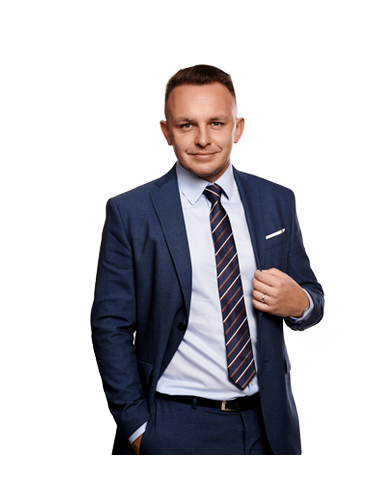
JUDr. Jakub Dohnal, Ph.D., LL.M.
31.1.2026 |
ARROWS law firm
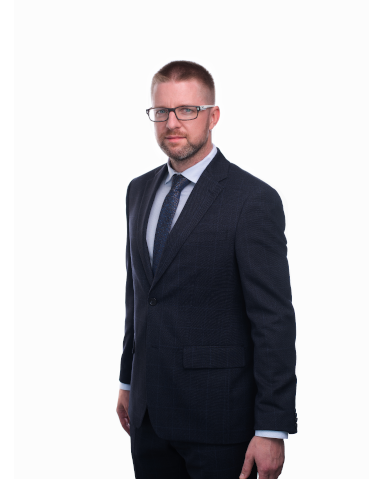
Mgr. Vojtěch Sucharda
31.1.2026 |
ARROWS law firm
The Middle East, particularly the United Arab Emirates and Saudi Arabia, offers a dynamic business environment and a gateway to Asian and African markets. In this article, you will learn how to navigate the differences between "Mainland" and "Free Zone" companies, the requirements for local partners, and how to effectively manage legal risks in the region under local regulations. Our Prague-based law firm is at home in this region thanks to our ARROWS International network, which actively assists Czech and Slovak entrepreneurs.
Quick Summary for Managers
- Choice of Jurisdiction: The key decision lies between Free Zones for 100% ownership and Mainland companies for direct trade on the local market.
- Saudi Arabia and Vision 2030: New regulations require multinational corporations to have a regional headquarters in the Kingdom if they wish to bid for government contracts.
- Cultural and Legal Specifics: Common law principles meet local regulations in certain areas, requiring precise contractual documentation and knowledge of local customs.
- Professional Background: ARROWS law firm ensures safe entry into these markets thanks to a decade of experience within the ARROWS International network.
Deciding Between Free Zone and Mainland Structures
When expanding to the Middle East, typically to Dubai or Abu Dhabi, entrepreneurs face a fundamental decision regarding their entity's structure. Free Zones allow foreigners 100% ownership of the company and offer tax holidays. They are ideal for companies focused on export or services provided internationally, but not for direct sale of goods on the local United Arab Emirates market without an intermediary.
In contrast, a Mainland company allows unrestricted business throughout the entire country. Previously, a local partner (Local Sponsor) was required in many cases, who had to hold a 51% share. Although legislation has been liberalized in recent years and 100% ownership is now possible on the mainland in many sectors, the correct setup of the articles of association and the founding contract, the so-called Memorandum of Association (MoA), remains a critical point.
Our Prague-based law firm ARROWS regularly handles these issues and helps clients identify the most suitable emirate and specific zone for their business. Details on investment rules can be found in the article on how to safely invest in real estate in Dubai. Our international presence allows us to handle cases with an international element daily through the ARROWS International network. In this area, ARROWS provides comprehensive services within international law. If you need advice on this matter, contact us at office@arws.cz.
Specifics of Establishing Entities in the Persian Gulf
- What is a PRO (Public Relations Officer)? This is a key representative role that handles all visas, licenses, and communication with local authorities (such as the Immigration and Labour Department).
- How does licensing work? Unlike in the Czech Republic, the region does not just deal with trade licenses; every company must have a specific license (Commercial, Professional, or Industrial) that is renewed annually.
- Is a physical office necessary? Most jurisdictions require proof of a lease agreement (Ejari in Dubai) to activate the license, although "flexi-desk" formats also exist.
Expansion into Saudi Arabia: New Rules and Opportunities
Saudi Arabia is undergoing a massive transformation under the Vision 2030 program. Opportunities are opening up for international firms in energy, construction, and IT. Given the growing investment in infrastructure, you might be interested to know that ARROWS offers expert consultancy for development and construction law. A key player is MISA (Ministry of Investment), where every foreign investor must obtain an investment license. This process is much stricter than in the neighboring Emirates and requires proof of the parent company's history and creditworthiness.
A specific feature of the Kingdom is the "Nitaqat" program, which addresses Saudization – the obligation to employ a certain proportion of local citizens. Failure to meet these quotas leads to restrictions on obtaining work visas for foreign experts. Our Czech legal team at ARROWS will ensure the preparation and review of contracts and guidelines that take these local labor standards into account and protect your company from sanctions. Learn more about management liability in the article on practical duties of directors.
Legal issues in the Middle East are much more complex in practice than they appear at first glance. Every step, from the verification of founding documents to registration with regulatory bodies, has hidden exceptions and procedural details in the real world. Therefore, it is safer to have the matter professionally secured. When entering new markets, it is also crucial not to underestimate partner due diligence, which the article on the Financial Analytical Office and AML compliance checks can help you with. For a consultation, contact us at office@arws.cz.
| Risks and Sanctions | How ARROWS assists (office@arws.cz) |
| Incorrect License Selection: Inability to invoice certain services on the local market and the risk of high fines for unauthorized activities. | Legal and Business Consultations: Precise analysis of activities and selection of the correct license with the relevant regulator or zone. |
| Non-compliance with Saudization (KSA): Blocking of the Ministry of Labor portal and the inability to renew visas for key managers. | Representation before Registries and Regulators: Setting up HR processes so that the company meets local quotas and regulatory requirements. |
| Invalid Sovereignty Clause: Risk that disputes will be resolved in local courts in Arabic instead of international arbitration (e.g., DIFC). | Contract Drafting and Review: Establishing arbitration clauses and choice of law to protect the interests of the international investor. |
| Expiration of Trade License: Immediate blocking of corporate bank accounts and inability to pay salaries or settle supplier invoices. | Representation in Licensing Proceedings: Monitoring deadlines and ensuring a smooth renewal process for all authorizations and permits. |
Contractual Relations and Investment Protection in the Arab World
When negotiating with business partners in the Middle East, it is necessary to consider that even though the law is modernized, it may still contain elements based on Sharia, particularly regarding interest or damages. Correctly setting up Dispute Resolution mechanisms is crucial. We recommend utilizing jurisdictions such as the DIFC (Dubai International Financial Centre), which operate on the principles of English law.
ARROWS, a law firm in Prague, handles these matters daily and can significantly reduce the time required for vetting business partners. We have experience providing long-term services to a wide portfolio of clients, including over 150 joint-stock companies. We pride ourselves on speed and high quality, and we are insured for damages up to CZK 400,000,000, ensuring maximum security for our clients.
Given the time commitment and the risk of errors, it is better to entrust expansion into the hands of experts. Our Prague-based attorneys specialize in these issues and can assist you with matters such as professional legal opinions or representation in negotiations with regulatory authorities.
Local Specifics and FAQ Microblock
- Is legalization of documents necessary? Yes, documents from abroad must undergo super-legalization at the Ministry of Foreign Affairs and subsequently at the embassy of the given country, a process that takes several weeks.
- What about taxation? The UAE introduced a corporate tax of 9% in 2023, though exemptions still exist for Free Zones meeting the "Qualifying Free Zone Person" status.
- Do I need a local director? Most Free Zones in the UAE do not require a resident director, but for Mainland companies and in Saudi Arabia, a resident representative (General Manager) is often essential for administrative tasks.
Bank Accounts and Financial Compliance
Opening a bank account is currently one of the biggest hurdles when entering the Middle East. Banks apply extremely strict KYC (Know Your Customer) rules and vet not only the company but also the ultimate beneficial owners and the source of their wealth. Without professional assistance and correctly prepared documentation, the process can drag on for many months or end in rejection.
Our attorneys in Prague will help you prepare supporting opinions and documentation to meet the requirements of international banking houses. Our experience in providing services to large investors and capital groups allows us to communicate effectively with compliance departments. Do you need advice on this matter? Contact us at office@arws.cz.
Furthermore, ARROWS law firm can connect clients with each other if they have interesting investment or business opportunities in the region. If you are looking for financing or a partner for a purchase or sale, we would be happy to hear your business ideas. To resolve your situation, write to us at office@arws.cz.
| Risks and Sanctions | How ARROWS assists (office@arws.cz) |
| Bank Account Rejection: Inability to start operations in the region despite having already established and paid for a company. | Commercial and Business Consultations: Preparation of a complete file for the bank and assistance during the approval process. |
| Violation of AML Regulations: Freezing of funds and lengthy investigations by the central bank and regulators. | Legal and Tax Advisory: Setting up internal control mechanisms in accordance with international standards. |
| Litigation in Local Language: High translation costs and uncertain outcomes in traditional courts without an international element. | Litigation Representation: Providing legal defense and coordination with local partners within the ARROWS International network. |
| Insufficient IP Protection: Copying of a brand or product by local competitors without the possibility of legal defense. | Representation before Registries: Registration of trademarks and copyrights throughout the GCC region. |
Conclusion
Establishing a company or branch in the Middle East represents a gateway to immense wealth and growth, but it requires absolute precision in legal and administrative details. Differences between individual Emirates, the specificities of the Saudi market, and demanding banking procedures make this expansion a task for specialists.
Our Prague-based attorneys at ARROWS law firm have long-standing expertise in this region and regularly handle these matters for major corporations and family businesses. Our professional indemnity insurance and decade-long network of contacts guarantee that your market entry will be secure and efficient. If you want to avoid risks, damages, or fines, you can safely leave the entire process to the professionals at ARROWS law firm in Prague.
FAQ – Most Frequent Legal Questions on Setting Up a Business in the Middle East
-
What is the difference between a branch and a subsidiary in the UAE?
A branch is legally linked to the parent company and does not require a capital contribution, while a subsidiary is a separate legal entity. The choice depends on liability strategy and tax planning. Our Prague-based attorneys at ARROWS law firm will help you with the selection. Contact us at office@arws.cz.
-
Is there really zero tax in Dubai?
As of June 2023, a federal corporate tax of 9% was introduced for profits exceeding AED 375,000. However, companies in many Free Zones may still enjoy a 0% rate if they meet specific conditions. For an analysis of your tax position, write to us at office@arws.cz.
-
Can I own 100% of a company in Saudi Arabia as a foreign investor?
Yes, thanks to changes in legislation, 100% foreign ownership is possible in most sectors; however, it requires a license from MISA and fulfillment of minimum capital requirements in certain industries. Do you need advice on this matter? Write to office@arws.cz.
-
How long does it take to obtain an investor residency visa?
The process usually takes 2 to 4 weeks after the company is established and includes a medical examination and biometric data. Our Czech legal team from ARROWS law firm will provide full support. If you are dealing with a similar matter, contact us at office@arws.cz.
-
Do I need to translate company formation documents for the region into Arabic?
Most authorities require a translation of all founding documents by a certified translator in the respective country. We will fully arrange this for you as part of our services. Looking for specialists? Write to office@arws.cz.
-
Can a company in the Emirates be established remotely?
In some Free Zones, this is possible via digital signature or power of attorney; however, Mainland companies often require the physical presence of the director for signing before a notary. For a secure solution, reach out to us at office@arws.cz.
Disclaimer: The information contained in this article is for general informative purposes only and serves as a basic orientation on the subject. Although we ensure maximum accuracy of the content, legal regulations and their interpretation evolve over time. To verify the current wording of regulations and their application to your specific situation, it is essential to contact ARROWS law firm in Prague directly (office@arws.cz). We bear no responsibility for any damages or complications arising from the independent use of information from this article without our prior individual legal consultation and professional assessment. Every case requires a tailor-made solution, so please do not hesitate to contact us.
Read also:
- How to Open a Company or Branch in the Czech Republic as a Hungarian Business:
- How to Build a Corporate Presence in the Czech Republic as a Greek Company: A Clear Roadmap:
- Setting Up a Czech Subsidiary: Key Legal and Tax Considerations:
- Cross-Border Construction Law and Building Due Diligence in the Czech Republic: What Foreign Investors Should Know:
- How to Check Your Czech Business Partner Before It’s Too Late: