When External Counsel Fails
Internal Legal Team's Role in Business Risk Management in the Czech Republic

When external counsel fails, the company should act before weak advice becomes a regulatory, contractual or reputational problem. The in-house legal team should review the advice, identify conflicts of interest, secure key documents and bring in independent counsel where needed. This article explains how to spot warning signs, manage a safe handover and structure legal support so the business keeps control of its risks.
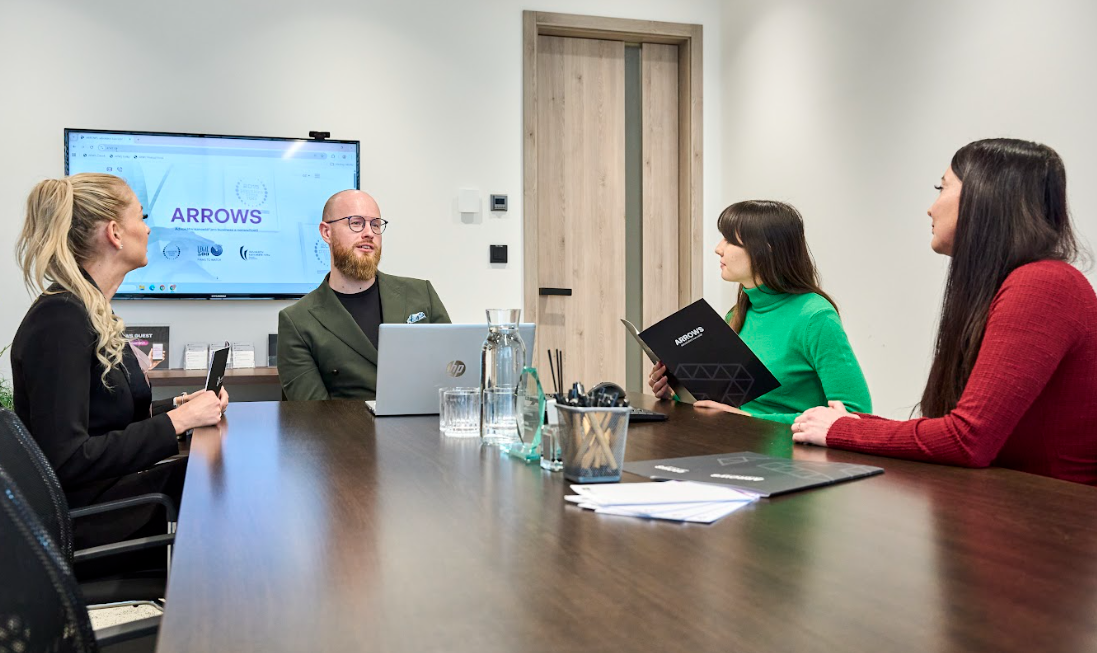
Understanding external counsel failure: Why professional advisors fall short
When a company engages external counsel, the expectation is straightforward: an objective, expert perspective from lawyers unburdened by internal corporate politics. In theory, law firms bring specialised knowledge, resources, and independence that internal teams cannot match.
In practice, this theoretical advantage frequently dissolves when ethical conflicts, cognitive biases, and misaligned financial incentives transform external counsel into a liability rather than a solution. The most insidious external counsel failures occur in matters where the law firm has previously advised the company on related transactions or governance issues. A firm that advised your company on an acquisition five years ago may later be retained to investigate potential misconduct discovered during post-integration review.
This arrangement creates a fundamental conflict: the investigating lawyers must potentially examine and criticise advice given by their own colleagues on the same transaction. Few firms navigate this conflict with genuine objectivity.
Consider the practical reality: if the investigation reveals that the firm's original acquisition advice was inadequate, the firm faces a choice between honest reporting or defending their prior work. This is not a theoretical concern—it is a predictable consequence of structural incentives that most companies fail to anticipate when selecting counsel. Beyond ethical conflicts lies a more subtle problem: cognitive bias.
All professionals, including lawyers, rely on mental shortcuts when processing complex information. The "framing effect"—where seemingly rational choices are manipulated by how choices are presented—influences even experienced attorneys. When a firm's own colleagues may be implicated in misconduct under investigation, confirmation bias becomes almost inevitable.
The financial incentives facing external counsel amplify these biases. A law firm operating under a "one firm" approach has strong institutional interest in preserving relationships with influential executives. Even where firm lawyers can acknowledge misconduct by executives from whom they have taken instructions, confronting those issues creates reputational and financial problems for the firm.
Acknowledging that the company failed to implement the firm's prior compliance advice—or worse, that the firm's advice was itself deficient—threatens future engagement and damages the firm's credibility.
For companies operating in the Czech Republic, these failures carry particular weight. Czech law operates under a civil law system fundamentally different from common law jurisdictions in the United Kingdom or United States. Firms unfamiliar with Czech legal nuances may provide advice that appears legally sound but fails under Czech court interpretation or regulatory scrutiny.
The cost of in-house counsel inadequacy
Many companies respond to external counsel failures by consolidating legal work in-house, assuming that a general counsel can manage all legal matters. This approach creates a new set of problems.
In-house counsel typically possess broad legal expertise but often lack the depth and specialised knowledge required for complex, rapidly evolving areas of law. The result is that companies find themselves paying for in-house counsel who cannot adequately address the very risks that external counsel failed to manage. The financial reality of in-house counsel is rarely understood upfront.
A skilled General Counsel in the Czech Republic commands a significant package. Total employment costs for a qualified General Counsel typically range between CZK 3,000,000 to CZK 5,000,000 annually. Adding a junior lawyer or paralegal adds another CZK 1,000,000 to CZK 1,500,000 annually in total labor costs.
The real cost trap emerges during peak demand periods. Legal work is not evenly distributed. Months pass with minimal activity, yet your general counsel still draws full salary. Then a crisis emerges: a regulatory inspection from the State Labour Inspection Office (SÚIP) or a commercial dispute. Suddenly your in-house counsel's capacity is exhausted, yet you still pay the full salary while also engaging external specialists.
In-house counsel also carries hidden liability limitations. If your in-house general counsel makes a legal error—missing a statute of limitations or failing to advise on regulatory compliance—your recourse is strictly limited by the Czech Labour Code.
Under Section 257 of the Labour Code, an employee's liability for damages caused by negligence is capped at 4.5 times their average monthly earnings. This amount rarely covers the millions in damages that can result from a serious legal error.
Staffing challenges exacerbate these gaps. In-house legal positions suffer high turnover among junior and mid-level attorneys, yet senior positions see little movement. This creates an experience imbalance where new lawyers lack depth. Retaining specialized expertise—someone with deep knowledge of employment law, data protection (GDPR), or regulatory affairs—becomes exceptionally difficult.
Czech-specific compliance risks: Where external counsel most commonly fails
External counsel working in the Czech Republic frequently stumbles on issues that appear straightforward but contain hidden complexity reflecting the unique aspects of Czech law and regulatory enforcement.
Labour and employment compliance represents one of the highest-risk areas, as Czech labour law imposes strict requirements on employment relationships. For example, companies using temporary agency workers must comply with precise documentation requirements. The Temporary Assignment Agreement between agency and user must be in writing; if not, the assignment is invalid. The State Labour Inspection Office interprets invalid or factual assignment without proper licensing as illegal work (nelegální práce).
Seemingly small omissions or disguised employment arrangements can result in fines up to CZK 10,000,000 (approx. EUR 400,000) under the Employment Act.
External counsel often views these requirements as administrative formalities. In practice, the State Labour Inspection Office does not rely on contract titles when investigating disguised employment arrangements. Inspectors examine substance: does the contractor work exclusively for your company?
Data protection and GDPR compliance presents another area of consistent external counsel failure. While the General Data Protection Regulation applies EU-wide, Czech supervisory authorities (The Office for Personal Data Protection - UOOU) and courts interpret certain requirements within the context of the Czech Act on Processing of Personal Data. Controllers must maintain comprehensive records of processing activities.
External counsel based outside the EU or unfamiliar with Czech regulatory practice often advises on GDPR compliance in abstract terms. They recommend generic policies without conducting the contextual risk assessment that Czech regulators expect.
When a data breach occurs, external counsel frequently discovers that the documentation and security measures fall short of what Czech authorities interpret as adequate.
Contractual penalty clauses (smluvní pokuta) represent a profound area of external counsel failure, particularly for British companies and firms unfamiliar with Czech law. English common law distinguishes between legitimate liquidated damages and unenforceable penalty clauses.
Czech law operates under entirely different principles, where the smluvní pokuta is a powerful and flexible contractual tool designed to be preventive and punitive. A typical Czech commercial contract might include a penalty clause stipulating 0.5% of contract value per day of delay in payment. A ten-day administrative delay could trigger a penalty of 5% of the entire deal.
While Czech courts have the power to moderate "unreasonably high" penalties moderační práv ), this requires active litigation—which is costly and uncertain.
|
Risks and Sanctions |
How ARROWS Helps (consultation@arws.cz) |
|
Czech labour compliance gaps: State Labour Inspection Office fines reaching CZK 10,000,000 for illegal employment, combined with potential tax reclassification and wage claims. |
Comprehensive labour law compliance audits: ARROWS lawyers review employment documentation, temporary assignment agreements, and contractor arrangements daily, identifying compliance gaps before inspections occur. |
|
Inadequate GDPR implementation: Data protection fines of up to 4% of annual worldwide turnover, combined with regulatory investigations, remediation costs, and reputational damage from privacy breaches. |
Data protection compliance programmes: ARROWS drafts comprehensive data processing documentation, conducts risk assessments aligned with Czech regulator expectations, implements security protocols, and represents companies in regulatory inquiries and breach investigations. |
|
Misunderstood contractual penalty clauses: Unexpected enforcement of smluvní pokuta clauses, triggering financial penalties far exceeding actual damages and eroding profit margins on contracts. |
Czech-compliant contract drafting: ARROWS reviews and drafts commercial contracts with Czech-specific language ensuring fair penalty provisions, conducting negotiation advice on balanced risk allocation, and defending against excessive penalty enforcement in Czech courts. |
|
Regulatory compliance failures: Missed filing deadlines for Beneficial Owners (UBO), incorrect corporate registrations, and incomplete disclosures result in penalties up to CZK 500,000, blocked voting rights, and profit distribution bans. |
Corporate compliance management: ARROWS manages annual compliance obligations, beneficial owner registration, statutory filings, and regulatory submissions, providing compliance checklists and ongoing advisory to eliminate gaps. |
Building an effective internal risk management framework
The transition from reactive firefighting to proactive risk management begins with structural change. Many in-house counsel operate in silos, responding to legal questions as they arise.
Effective risk management requires in-house counsel to become embedded in business decision-making, understand company strategy, and develop cross-functional relationships. In-house counsel's first responsibility is understanding the company's risk appetite and strategic objectives. What level of risk will leadership tolerate to achieve business goals? Does the company prioritise growth over regulatory caution?
These answers differ dramatically between a startup pursuing aggressive market expansion and an established company protecting market position. Yet many in-house counsel never have explicit conversations with their C-suite about risk tolerance.
The next step is establishing an Enterprise Risk Management (ERM) function if one does not exist. If your company has dedicated risk management infrastructure, in-house counsel must be formally integrated—not as a peripheral participant, but as a core member. If no ERM function exists, in-house counsel should advocate for creation of a cross-functional risk working group.
In-house counsel must also develop a sophisticated framework for distinguishing between different categories of risk. Pure legal risk includes regulatory non-compliance, litigation exposure, data privacy breaches, and employment violations.
Strategic risk encompasses market shifts, competitive activity, M&A decisions, and pricing strategy. Mixed risks are increasingly where in-house counsel adds the most value because they require integration of legal requirements with business objectives.
The most critical structural change is implementing systematic contract management and compliance monitoring. Many companies maintain contracts scattered across email folders, shared drives, and departmental filing systems.
The ARROWS Law Firm lawyers regularly handle contract management system implementations for Czech companies, and the experience reveals a consistent pattern: companies discover critical compliance gaps only after they have missed renewal deadlines.
When to engage external counsel: Strategic outsourcing vs. avoiding counsel failures
The question is not whether to use external counsel, but how to use it strategically while minimising the risk of counsel failure. Most companies benefit significantly from selective outsourcing of specific matters while maintaining core legal functions in-house.
The decision framework is straightforward: retain matters internally where you have developed organisational expertise, but engage external counsel for specialised expertise and high-stakes matters. Specialised expertise is the clearest trigger for external engagement. Complex antitrust investigations (UOHS proceedings), intellectual property litigation, complex M&A transactions, and regulatory proceedings require lawyers with deep specialisation in narrow practice areas.
Litigation, particularly complex or high-stakes disputes, strongly favours external counsel engagement. Courtroom advocacy requires specific skills and courtroom relationships that general counsel rarely maintain.
Engaging experienced outside litigation counsel early—even before disputes escalate to formal proceedings—allows counsel to assess risk and position your company for early settlement. The most important—and most overlooked—trigger for external counsel engagement is situations requiring independent, objective analysis insulated from prior relationships and internal politics.
Internal investigations, corporate governance inquiries, and compliance audits all benefit from counsel who has no history with company executives. This is particularly important in the Czech Republic, where investigative and regulatory inquiries may involve interactions with government officials and state authorities.
The Prague-based legal environment presents additional considerations. If your company operates across multiple jurisdictions or has significant Czech operations, retaining a law firm with deep Czech legal expertise is essential.
ARROWS Law Firm's lawyers handle cross-border matters daily, combining in-depth knowledge of the Czech legal environment with experience in international cases.
Transitioning failed external counsel relationships: Managing the handoff
When external counsel has underperformed or revealed serious conflicts of interest, transitioning away from that firm requires careful strategic planning. Abrupt termination, particularly during active matters, creates chaos and may prejudice your company's legal position.
The ARROWS Law Firm recommends conducting a formal document review with replacement counsel before terminating the original engagement, ensuring nothing critical is overlooked.
The first step is comprehensive document preservation. All work product, correspondence, client memoranda, internal notes, and factual materials related to the matter must be collected and organised.
Privilege analysis is essential before transitioning counsel. In the Czech Republic, statutory duty of confidentiality (povinnost mlčenlivosti) strongly protects communications between a client and an independent attorney.
However, this protection does not apply in the same absolute scope to in-house counsel, especially in the context of inspections by competition authorities (UOHS). For matters involving regulatory investigations or potential misconduct, engaging new independent counsel to review prior external counsel's work is often prudent. This independent counsel can assess whether prior investigation was adequate.
This independent assessment strengthens your company's position with regulators, auditors, and courts.
Conclusion
When external counsel fails, the damage extends far beyond legal fees wasted on inadequate advice. Regulatory penalties, missed compliance deadlines, and failed dispute resolution create business consequences that ripple through operations.
The most resilient legal risk management model integrates capable in-house counsel with strategic external engagement. In-house counsel must evolve from reactive legal advisors to strategic risk managers embedded in business decision-making. External counsel should be engaged selectively for specialised expertise, high-stakes matters, and situations requiring objectivity.
The ARROWS Law Firm's lawyers specialise in helping Czech and international companies navigate this complexity. Our team handles this agenda daily, which significantly reduces the time required for compliance analysis and implementation while minimising the risk of errors. ARROWS Law Firm is insured for damages up to CZK 350,000,000, meaning you can rely on professional security when entrusting these matters to specialists.
Whether you are struggling with counsel relationships that have failed or building an internal risk management framework, we can help you develop integrated strategies. We also connect with corporate counsel for handling specialised matters, and we are regular partners of leading companies across the Czech Republic and Central Europe.
About the author
Read also:
- How to outsource legal tasks in the Czech Republic without losing control over strategy
- How to Set Up an Effective Flat-Fee Legal Retainer in Prague
- How to Conduct a Tender for Legal Services in the Czech Republic: Legal Basics for Contracting Authorities
- Legal Advice vs Lobbying in Czech Law: Risks, Registration and Liability
- Do Your Board Minutes Pass the Test? How Courts Treat Corporate Resolutions in the Czech Republic
- Supply chain disputes in Czech law: How to win or settle smart
Disclaimer:
The information contained in this article is for general informational purposes only and serves as a basic guide to the issue as of 2026. Although we strive for maximum accuracy, laws and their interpretation evolve over time. We are ARROWS Law Firm, a member of the Czech Bar Association (our supervisory authority), and for the maximum security of our clients, we are insured for professional liability with a limit of CZK 350,000,000. To verify the current wording of the regulations and their application to your specific situation, it is necessary to contact ARROWS Law Firm directly (consultation@arws.cz). We are not liable for any damages arising from the independent use of the information in this article without prior individual legal consultation.