Lékařské prohlídky u noční práce
Are medical examinations required for night work?

Medical check-ups for night work do not have to be provided under the same regime for every employee who works at night. The decisive factor is whether they meet the conditions of a night employee under Czech legislation. In this article, we explain how to recognize this difference and when you actually need to send an employee for a check-up.
Key takeaways
- Night work is not the same as a “night employee”. Employers often confuse these terms, which leads to incorrectly setting the frequency of medical examinations.
- Annual medical examinations are mandatory only for a “night employee”. This is defined as an employee who works at least 3 hours of their shift during night-time hours (10:00 PM–6:00 AM) on average at least once a week.
- Performing night work without meeting the definition of a “night employee” does not require annual examinations. The periodic examination for such an employee is governed by the work categorization and may be required at longer intervals, for example, once every six years for category one work under Decree No. 373/2011 Coll.
- An employee starting a shift at 5:30 AM does perform night work, but often does not meet the criteria for a “night employee,” as they work less than 3 hours of night work per week. Therefore, the obligation for annual examinations does not apply to them.
- The current practice of employers sending all employees who perform any night work for annual examinations is welcome from a health care perspective, but it exceeds their statutory obligations.
Facing a similar situation?
The wording of the Act thus explicitly requires an examination at one-year intervals only for employees working at night. In practice, it is common for employers to send all employees who work at night for annual check-ups. The reason for this is the confusion between the terms "night work" and "employee working at night".
According to Section 78(1)(j) of the Labour Code, night work is any work performed between 10 p.m. and 6 a.m. In contrast, the same section, in paragraph 1(k), defines who is considered an employee working at night.
An employee working at night is an employee who works at least 3 hours of their working time during the night period within 24 consecutive hours on average at least once a week in the period specified in Section 94(1) of the Labour Code.
If the work is performed irregularly or to a lesser extent, it is still night work if it is performed during the night (an allowance for night work is due), but the employee is not subject to the rights and obligations of an employee regularly working at night under the Labour Code.
It is therefore very common to encounter cases where employees perform night work but are not necessarily employees working at night. A typical example would be an employee who regularly starts their work shift from Monday to Friday at 5:30 a.m. Although such an employee demonstrably also works at night, they only reach 2.5 hours of night work in a one-week period, thus not meeting the criteria for being classified as an employee working at night.
Facing a similar situation?
We will get back to you within 24 hours.
For such employees, a periodic medical examination may be required, as a rule, at longer intervals than once a year, depending on the relevant work category (for the first category, for example, once every six years, see Section 11 of Decree No. 373/2011 Coll., on occupational medical services and certain types of assessment care).
The practice outlined above is therefore welcome with regard to employee health care, but it goes beyond the obligations imposed by law.
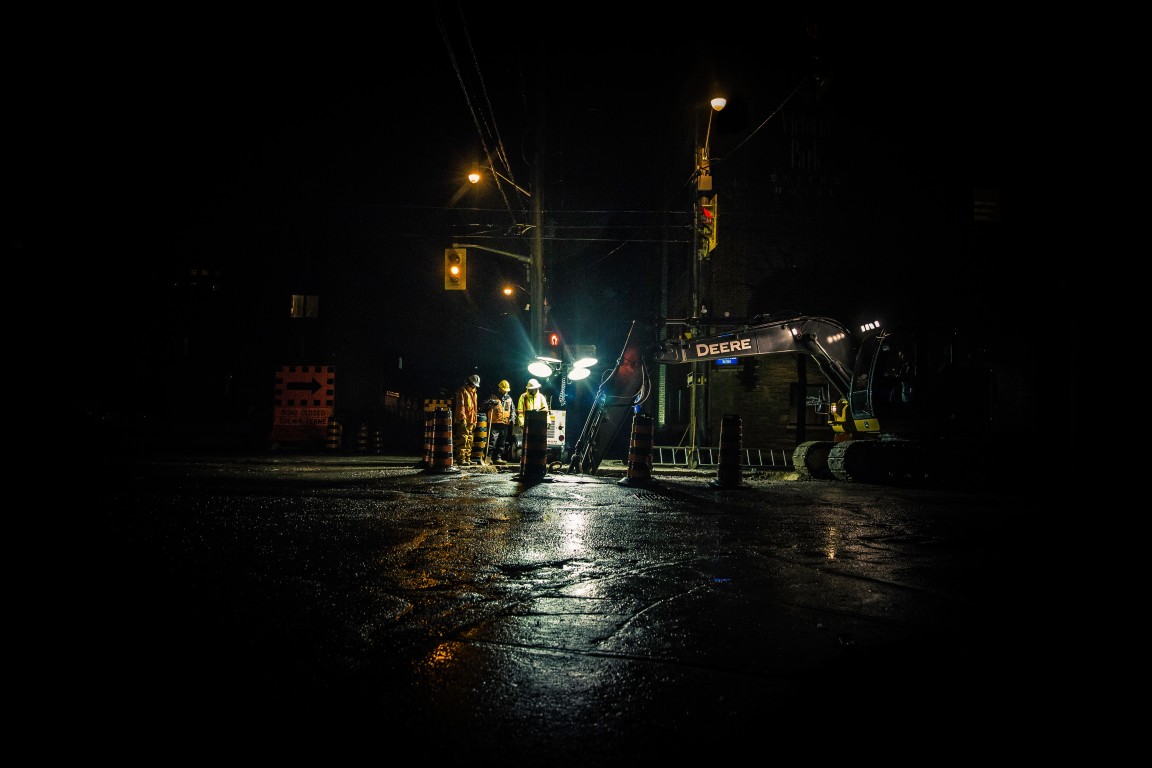
Photo by Matthew Henry on Unsplash
About the author
Disclaimer:
The information contained in this article is for general informational purposes only and serves as a basic guide to the issue as of 2017. Although we strive for maximum accuracy, laws and their interpretation evolve over time. We are ARROWS Law Firm, a member of the Czech Bar Association (our supervisory authority), and for the maximum security of our clients, we are insured for professional liability with a limit of CZK 350,000,000. To verify the current wording of the regulations and their application to your specific situation, it is necessary to contact ARROWS Law Firm directly (consultation@arws.cz). We are not liable for any damages arising from the independent use of the information in this article without prior individual legal consultation.